
History & Memory: Ethical Dimensions

insightS from Students
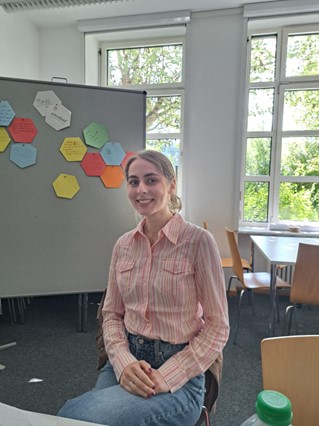
PASSAE – Statement: Antonia Weis (2025)
My Name is Antonia Weis.
I am from Munich where I study at the LMU the majors Philosophy and Middle Eastern Studies, my minor is Psychology.
My motivation to participate in PASSAE was my wonderful experience that I had there last year. I met so many great people, made friendships that have lasted ever since and learning and spending the week together was truly amazing. I was excited to have the opportunity of repeating the experience this year as well.
I would recommend to take part in PASSAE because it’s a great opportunity to grow personally and academically, meet new people from a variety of backgrounds and gain knowledge about very interesting new topics. It is a unique experience and I wish every student could take part in it.
The topic of this year’s summer school was made for my interests, starting with my background in history and psychology up to my main focus philosophy. It was especially inspiring to learn more about the connection between landscapes and history which is something I haven’t studied before. The study trip to Schloss Hartheim we took influenced me as well, I’ve been thinking about the discussed questions ever since.
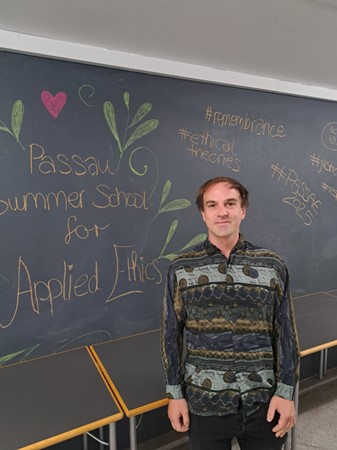
PASSAE – Statement: Georg Ebster (2025)
My name is Georg Ebster, and I am a student of Educational Sciences, History, and Philosophy at the University of Innsbruck.
Building on my BA thesis, which explored how lieux de mémoire (memory spaces) evolve over time, I intend to expand this research in my Master’s thesis. After presenting my initial ideas in class, my professor introduced me to PASSAE and encouraged me to participate.
Having attended several summer schools, I found that PASSAE truly stands out. The academic program is perfectly balanced—offering high-level lectures on cutting-edge topics without being overwhelming. The small working groups, curated social program, and mid-week excursion created an ideal environment for exchange.
While many topics aligned with my interests, I was particularly struck by the ethical dimensions of digital spaces. In this field, technological shifts occur so rapidly that philosophical questions often become urgent practical problems before we even have the chance to conceptualize them. This intersection of theory and real-world urgency is what makes the program so relevant.
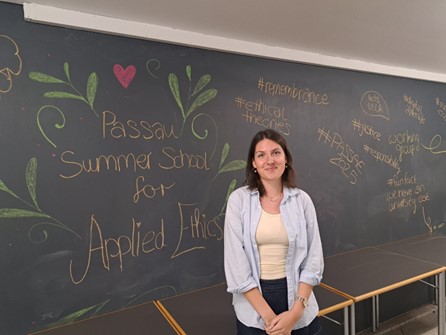
PASSAE – Statement: Zorka Fonyad (2025)
My name is Zorka Fónyad and I am from Budapest, Hungary. I study international relations at home.
I wanted to challenge myself in an international and new learning environment. The topics of the summer school caught my attention, especially some subfields I had not been very familiar with before, and I was excited to broaden my knowledge and dive into new perspectives. But what motivated me the most was the opportunity to get to know new people, listen to their ideas and reflections, and build friendships.
I would recommend participating in this summer school because it encourages you to explore and exchange new ideas about different topics in a welcoming and supportive atmosphere. I learned not only from the professors and lecturers, but also from new friends whom I enjoyed spending time with. It was really special to experience that people with different disciplines, academic and personal interests and cultural backgrounds came together and created something very valuable. If you enjoy sharing your thoughts, working in teams, meeting people from all over the world, exploring a new city and even practicing a little German, this place is definitely right for you.
I took part in the sustainability working group, and I found both the readings for instance about the ‘Green Belt’ or ‘duty to remember nature’, and the conversations about these topics inspiring. Exchanging ideas and thinking critically together opened my mind and expanded my academic knowledge. New concepts and ethical questions were discussed which helped us become more aware and attentive to our environment, our moral duties in the present and to the challenges of our future as well.
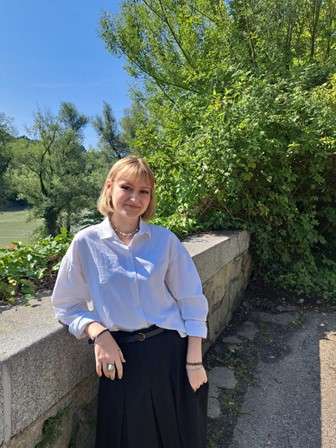
PASSAE – Statement: Maria Donica (2025)
My name is Donica Maria, I come from Moldova, and I am currently studying International Relations at ELTE in Budapest.
My motivation came from the intersection between theory and lived reality. International Relations is not only my field of study but also my everyday context: growing up in Moldova, with its unresolved questions of Transnistria and Gagauzia, I felt the urgency to explore how history and memory shape politics and belonging. At the same time, I was drawn to the possibility of comparing my country’s experience with those of others, and of learning how ethical approaches to memory can transform fragile geopolitical situations.
I would recommend PASSAE because it combines intellectual growth with human connection. I met inspiring people whose knowledge and perspectives I continue to learn from. Moreover, the classes, the free discutions and visiting Schloss Hartheim made me realize how questions of memory are not abstract but rooted in places, people, and their stories. This perspective now follows me back to Moldova, where the ways we remember or forget shape the different approaches to Transnistria and Gagauzia, and ultimately the country’s future.
What inspired me most were the unstructured conversations, moments where words flowed freely, and my vocabulary, perspective, and imagination stretched beyond their limits. As a photographer, I began to think of memory like an image: it is taken in the present, but its true meaning unfolds when it is seen, shared, and interpreted by others. Remembering, too, is never just for the past; it is an ethical gesture toward the future, a way to frame the world so that others can see what must not be forgotten. In International Relations, this lesson feels crucial: memory, when carried with responsibility, becomes not a burden but a bridge: shaping dialogue, preventing silence from becoming complicity, and making diplomacy a space where history can be acknowledged rather than denied.
PASSAE – Statement: Matej Vodopivec (2025)
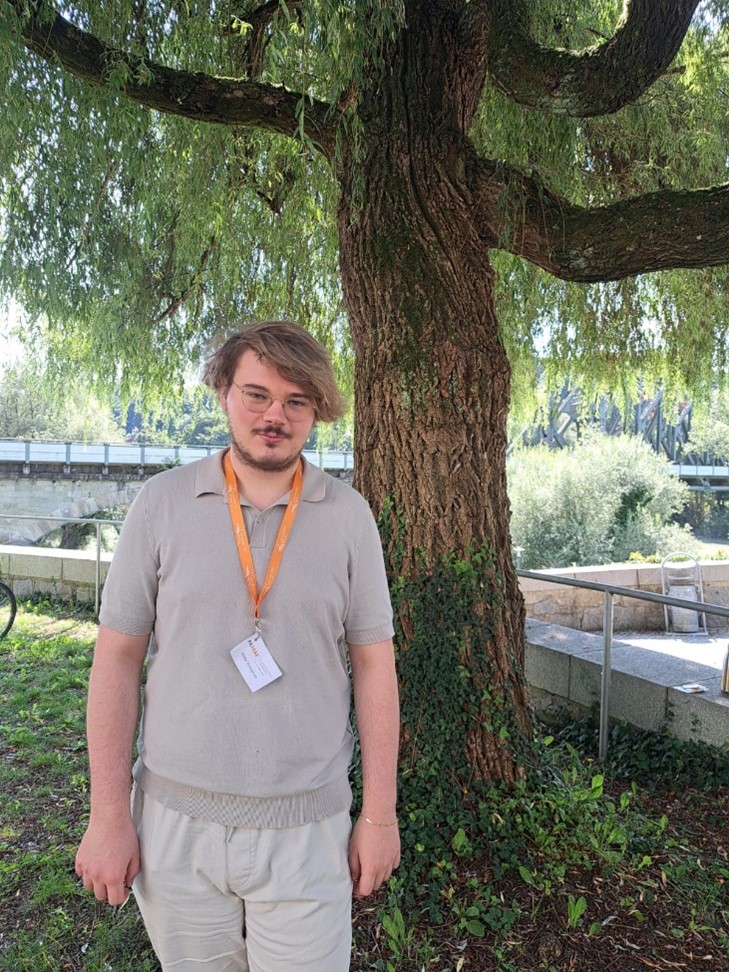
My name is Matej Vodopivec. I’m from Slovenia, and I’m currently writing my master’s thesis at the Faculty of Arts, University of Ljubljana. I’m specializing in archival research on church history, especially the church history of the Habsburg lands in the early modern period.
Our university posted an invitation to PASSAE, and I really liked the poster. Together with two of my colleagues, we decided to apply because the topics were very interesting to us. Personally, I really wanted to learn more about philosophical approaches to history and memory, as I felt this was somewhat missing from my previous studies.
I would absolutely recommend taking part in PASSAE. It was a wonderful opportunity to meet new people and create new connections with like-minded students and researchers, which I feel is very important in the academic world. The atmosphere throughout the entire week was fantastic and relaxed, while still offering many opportunities to learn. I discovered new approaches to writing essays, creating presentations, and participating in debates; all of which are important for aspiring academics. The social programme of PASSAE, and particularly our trip to Hartheim, was also very well thought out and made the theoretical approaches we had learned during keynote presentations and working groups even clearer.
The part of PASSAE that I will definitely remember the most is the dichotomy between the duty to remember and the right to be forgotten. It was a completely new concept to me, but after learning about it in detail during the summer school, I will definitely incorporate it into my future studies and research.

We thank the Passau International Center for Interdisciplinary Research (PICAIS), the Gesellschaft für Analytische Philosophie (GAP) and the Kant-Gesellschaft for supporting PASSAE 2024.
University of Passau – Professorship of Applied Ethics – passae@uni-passau.de